

The 10 best songs about London
In this article, we’ve picked 10 of the best songs about London. From all-time classics to modern hits, we're...

Starting an English-learning journey in the United States is more than an academic activity; it’s an investment in your future and a life-changing cultural experience. America has countless opportunities for personal growth. In the USA, you can improve your English language skills in the classroom, through daily interactions with locals, and with cultural experiences. For many international students, studying in the USA is a pathway to higher education and global career prospects.
The significant presence of these students is clear, as they contributed $43.8 billion to the U.S. economy during the 2023-2024 academic year, highlighting their integral role in American academic life.
This guide will take you through your essential steps, from securing the correct visa and budgeting for your stay to choosing the perfect school and maximising your time in the USA.

The first and most critical step for any full-time language student is understanding the visa process. For intensive English courses, the F-1 visa is your key to legally entering and studying in the United States.
The F-1 visa is a non-immigrant visa for individuals wishing to pursue academic studies in the United States. It is for students enrolled in full-time programs at accredited colleges, universities, or language institutes. To be eligible for an F-1 visa to study English, you must enrol in a course that typically consists of at least 18 hours of classes per week. This visa allows you to remain in the U.S. for the duration of your studies, plus a 60-day grace period after your studies to prepare for departure or transfer to another programme.
A critical component of this process is the Student and Exchange Visitor Program (SEVP). You can only apply for an F-1 visa after being accepted into a program at a SEVP-certified school. This certification proves your chosen institution meets government standards for enrolling international students.
Securing your F-1 visa involves a multi-step process that calls for careful preparation and attention to detail.
Once you arrive in the U.S., maintaining your F-1 status is your responsibility.
Key requirements include:
You must also keep your Form I-20 valid and report any changes, such as your address or program, to your school’s Designated School Official (DSO).
Note: visas and costs can change; we recommend checking official sites (USCIS, State Dept, school websites) for the most up-to-date information

Financial planning is a cornerstone of a successful study abroad experience. The cost of learning English in the USA varies significantly based on the program, city, and your personal lifestyle.
Tuition is your largest predictable expense. The cost of English courses can range widely. Intensive English programs at private language schools might cost anywhere from $300 to $800 per week. University-based programmes are often more expensive, potentially costing $2,000 to $5,000 or more per semester. Overall, international students typically pay between $20,000 and $55,000 per year for tuition, depending on the type of institution. When comparing programs, look at the total cost for the desired length of study, not just the weekly or monthly rate.
Your choice of city will have the biggest impact on your living expenses. A major metropolitan centre like New York or San Francisco will be far more expensive than a smaller city in the Midwest or South.
Beyond tuition and daily living, several other costs are necessary.
To manage your finances, create a detailed budget before you arrive. Track your spending weekly to stay on course. Look for student discounts you can use on transportation, food, and entertainment. Scholarships for standalone English language courses are not common, though there are sometimes opportunities in degree programmes. Ask EFL/ESL schools about any current special offers, payment plans and discounts on long-term courses.
F-1 students have minimal work options, typically restricted to on-campus employment (if at all) for up to 20 hours per week during the school year, so do not rely on working to fund your education.
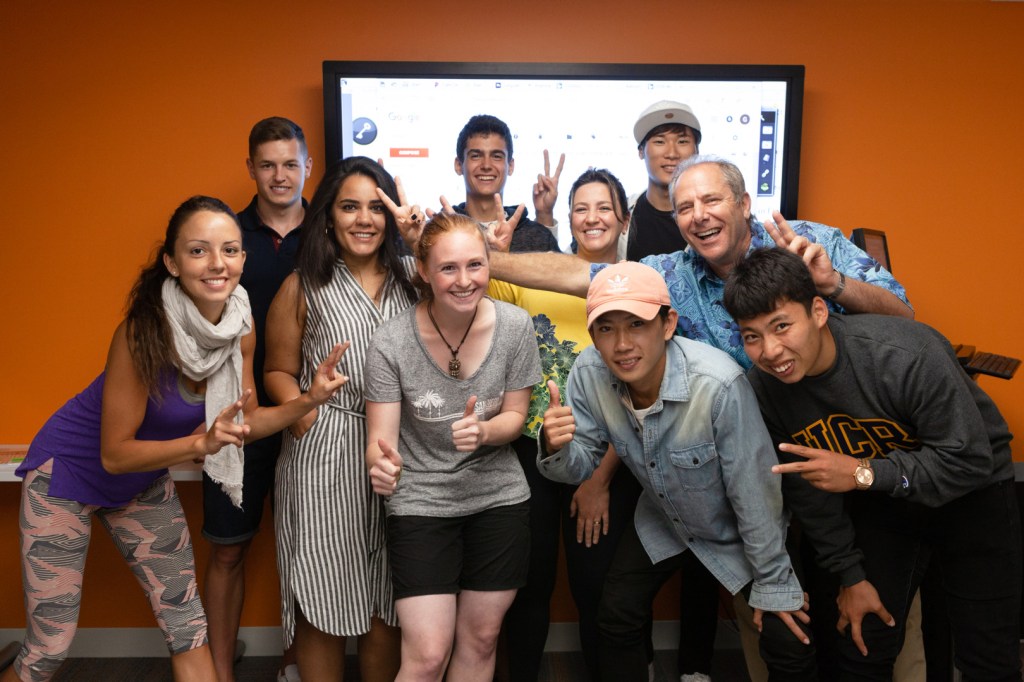
With so many options available, choosing the right programme is a critical decision. The best fit depends on your academic goals, budget, and desired lifestyle.
There is a wide variety of English courses available to meet different needs.
You can study English in several types of institutions:
Consider these factors to narrow your options:

The city you choose will be the backdrop for your entire experience, shaping your daily life and opportunities for language practice.
Cities like New York, Boston, and San Francisco offer energetic, fast-paced environments. They are hubs of culture, business, and diversity, providing endless opportunities to practice English. You’ll have access to world-class museums, theatres, and restaurants. However, the cost of living in these major cities is significantly higher, and the pace of life can be overwhelming for some.
For those who prefer a more laid-back lifestyle, cities in California and Florida are ideal. San Diego, with its beautiful beaches and year-round pleasant weather, is a popular choice. Miami offers a unique blend of American and Latin American cultures. These locations provide a great balance between serious study and recreational activities, but can still be moderately expensive.
Don’t overlook smaller university towns like Boulder, Colorado, or Madison, Wisconsin. These cities offer a high quality of life at a much lower cost. You may find a stronger sense of community and more opportunities to interact with local Americans, which can accelerate your language learning and cultural understanding.

True language mastery happens outside the classroom. Your time in the USA is a unique opportunity for total immersion.
Every interaction is a lesson. Join university clubs, volunteer for a local cause, or get a part-time on-campus job. Attend free public lectures, go to local festivals, and strike up conversations with people you meet. The more you engage with your surroundings, the faster your English skills will improve.
The USA is a mosaic of different cultures. Be open-minded and curious. Participate in American traditions like Thanksgiving or the Fourth of July. Make friends with both Americans and other international students. Building a diverse social network will enrich your life and provide constant, natural language practice.
Supplement your English classes with self-study. Read American news websites, watch movies without subtitles, and listen to podcasts on topics that interest you. Keep a journal in English to practice your writing skills and reflect on your experiences. Consistency is key to long-term fluency.

Improving your English is often the first step toward bigger goals.
If your goal is a degree from an American university, your language program is the perfect preparation. Many programs have pathway agreements with partner colleges, allowing for a smooth transition without needing to retake a TOEFL or IELTS exam. Use your time to research universities, prepare your applications, and get guidance from academic advisors at your language school.
English ability is a major asset in the global job market. Your experience studying and living in the USA demonstrates adaptability, cross-cultural communication, and independence. These are all qualities valued by employers. Even if you return to your home country, your improved English language proficiency will open doors to new career paths.

Learning English in the United States is a transformative journey that combines rigorous education with profound personal growth. By carefully navigating the visa process, planning your finances, and selecting a program that aligns with your goals, you can set yourself up for success.
Your experience is about more than just mastering grammar in a lesson; it’s about building confidence, discovering new cultures, and creating a foundation for your future academic and professional life.
Your adventure begins with research and planning. Start exploring SEVP-certified schools, calculate a realistic budget for your target city, and begin preparing your visa application. The time and effort you invest now will pay dividends for years to come.
Live online English classes for continuous learning.

Did you like this article? Share it!